

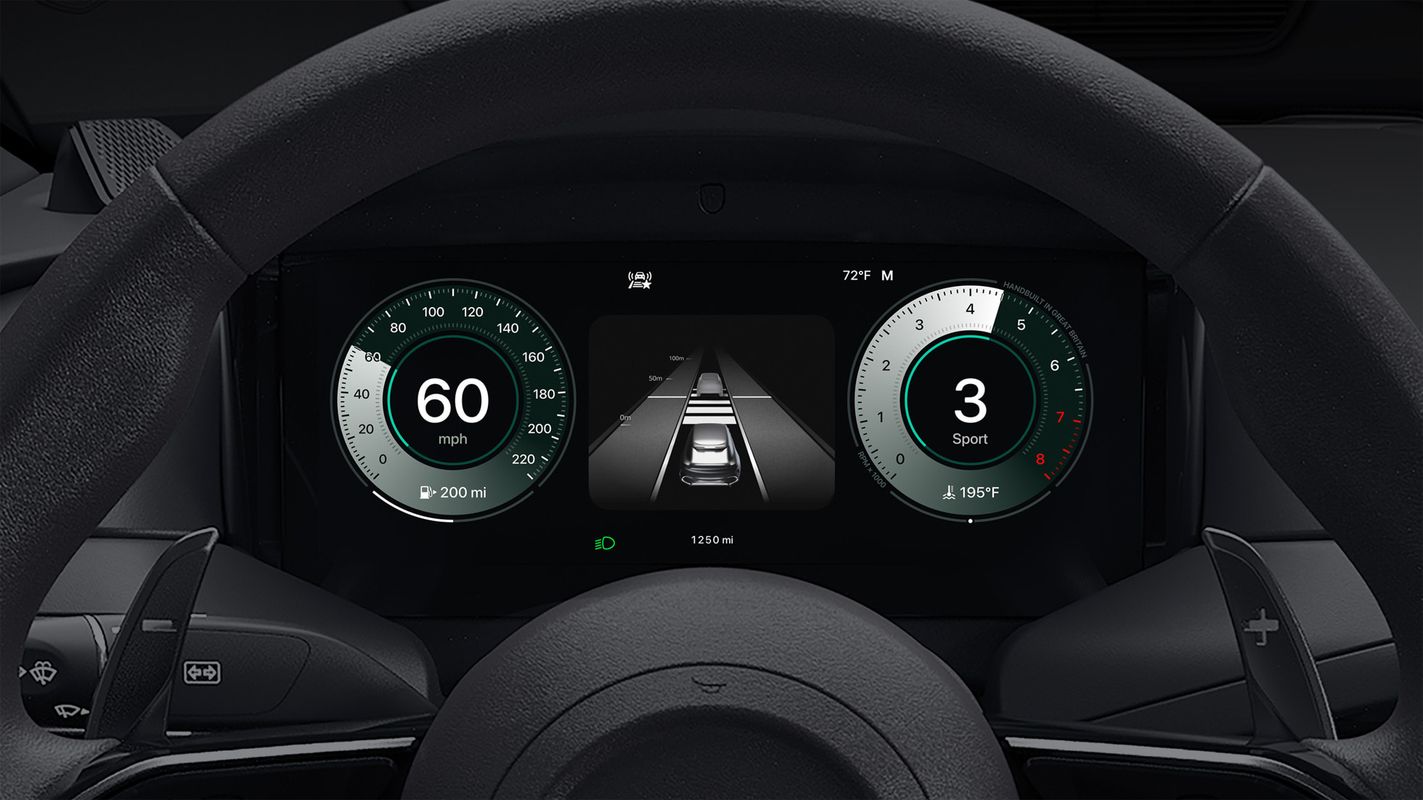
CarPlay Ultra coming in 2026
Apple's CarPlay Ultra is live in Aston Martins and heading to 12 more brands

Apple has confirmed 13 automakers are now signed on to support CarPlay Ultra, the deeply integrated next generation of its in-car software, with Aston Martin the only brand currently shipping it.
The updated list as of May 2026 includes Porsche, Hyundai, Kia, Ford, Honda, Jaguar, Land Rover and Nissan.
What CarPlay Ultra actually is
Standard CarPlay projects your iPhone onto a single screen in the dashboard, typically the central display, and leaves the rest of the car alone. CarPlay Ultra goes considerably further. It takes over both the central display and the digital instrument cluster, rendering speedo, rev counter, fuel and temperature gauges, climate controls, and even drive mode selection through Apple's interface. It pulls live data from the vehicle's CAN bus and surfaces it inside an environment that looks and behaves like an iPhone.
The practical upshot is one consistent visual language across every screen in the car. Map guidance can sit directly behind the steering wheel rather than fighting for attention on a separate display, and climate or seat-heating adjustments live within the same interface as music and messaging.
Which brands are in, and which walked away
Apple originally announced a much longer list of partners at WWDC 2022. Several have since stepped back. Mercedes-Benz pulled out in 2024, and the Financial Times has since reported that Audi, Volvo, Polestar and Renault have also declined to ship the system, despite being named publicly.
Ford remains an interesting case. CEO Jim Farley told reporters in late 2025 that the company is still "considering" Ultra but is unimpressed with the first version, while reaffirming its broader commitment to working with Apple. That deliberation tells you something about where the platform sits commercially. Manufacturers are weighing the appeal to customers against the awkward reality of handing a third party control of the cabin's most prominent surfaces.
How it might change the driving experience
Two things matter from behind the wheel. The first is information hierarchy. Modern cars throw a lot at the driver, and most factory infotainment systems are organised around manufacturer logic rather than driver workload.
CarPlay Ultra has the potential to put the most relevant information closest to the eye line, particularly turn-by-turn navigation in the binnacle, with secondary functions sitting one glance away on the central screen. Used well, that is a workload reduction.
The second is consistency. A driver who switches between two or three cars regularly currently has to relearn three different infotainment systems, three different climate menus, and three different ways to pair a phone.
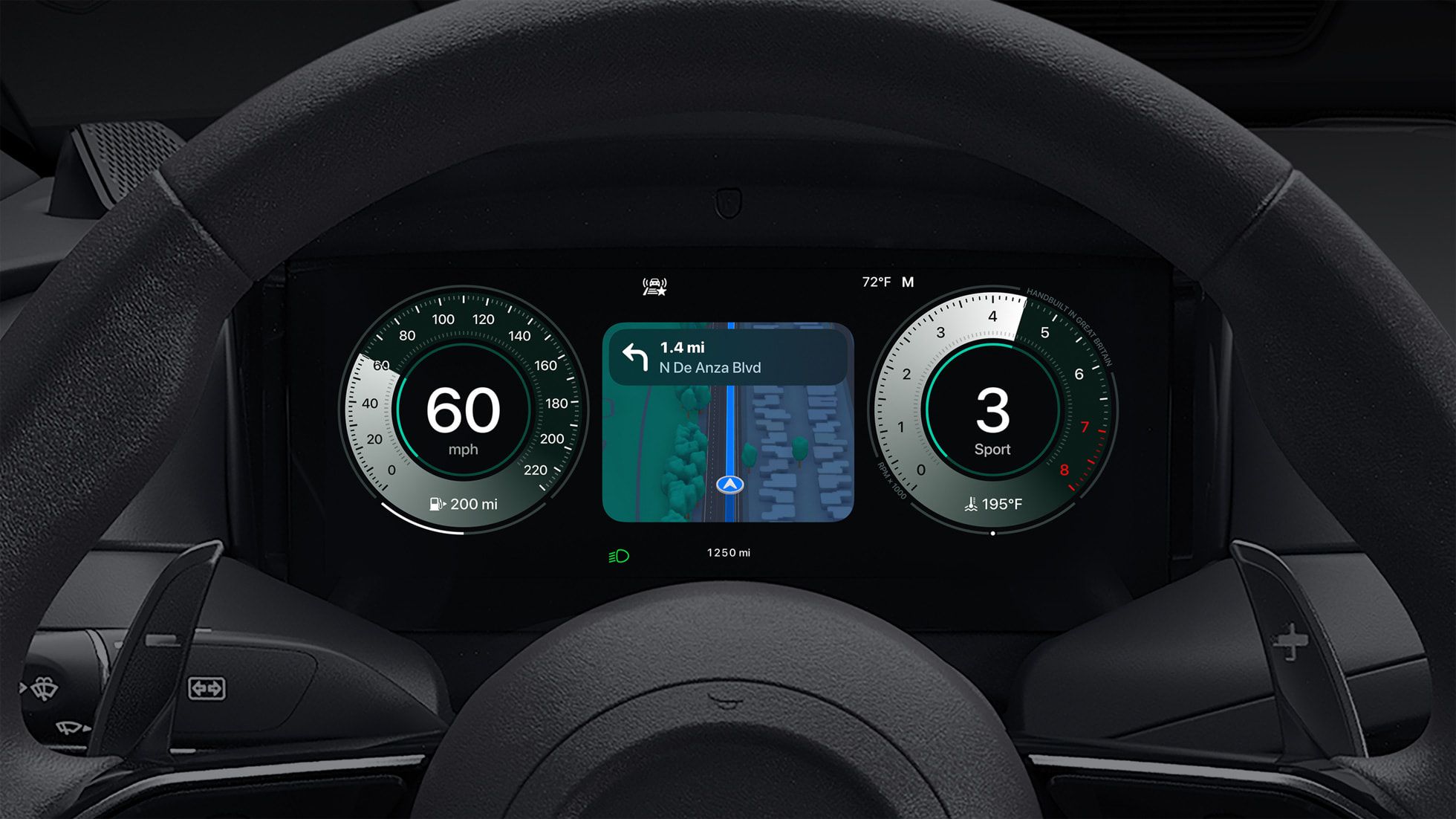
A common interface across vehicles removes that cognitive overhead. Anyone who has spent time with advanced driver coaching knows that smooth, anticipatory driving rests on freeing up mental capacity for what is happening outside the car. Familiar controls help with that.
The honest caveat is that any system encouraging deeper interaction with screens needs to be used with discipline. CarPlay Ultra leans heavily on voice command and minimal screen interaction by design, and drivers who lean into that approach will get the most from it.
And then there's Grok
While Apple has been signing up carmakers for Ultra, the broader CarPlay platform is quietly turning into a competitive arena for AI assistants. xAI's Grok is the latest to confirm it is coming, joining ChatGPT and Perplexity, after a placeholder appeared in the iOS Grok app last week reading "Grok Voice mode coming soon to CarPlay."
Apple's own - increasingly lame - Siri remains the only assistant with deep system-level integration. Third-party AI apps cannot use a wake word and have no access to vehicle controls. They are voice-driven apps you open manually, ask a question of, and listen to.
For a driver, the appeal is having a more capable answer engine available without pulling out the phone. The risk, as with any conversational interface, is mission creep. A quick traffic check is one thing. An open-ended chat at motorway speeds is another.
Why it matters
CarPlay Ultra represents the first serious attempt by a tech company to take responsibility for the entire driver-facing software experience rather than a single screen. Whether it improves driving or merely makes the dashboard more legible will depend on how each manufacturer implements it, and on how disciplined drivers are about using voice rather than touch.
For now, anyone outside of an Aston Martin showroom is waiting. The Hyundai or Kia launch later this year will be the first real test of whether Ultra can work at a price point most drivers might actually consider.
Updated:
« Back to News