

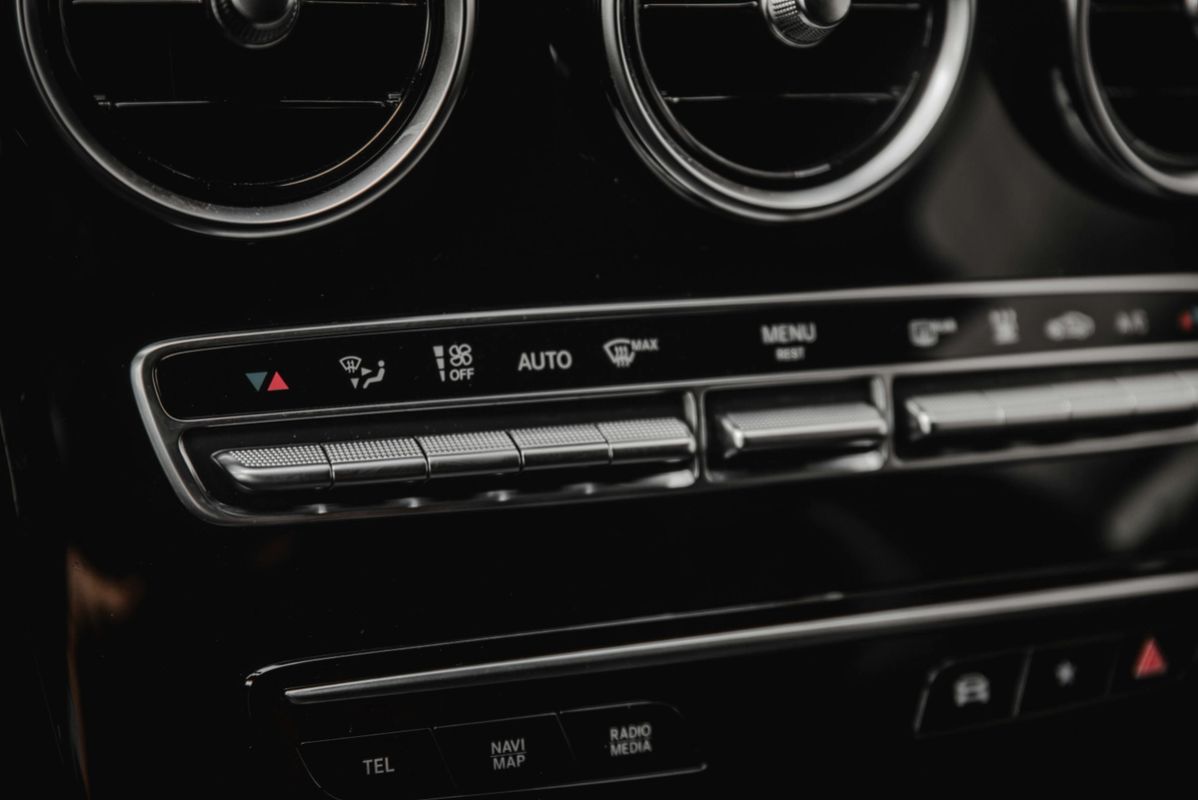
Buttons are Back!
Mercedes-Benz brings back physical buttons as touchscreen backlash builds

Mercedes-Benz has confirmed it will reintroduce physical buttons across its future model range, starting with the new electric GLC due in 2026. The decision, announced by software chief Magnus Östberg at the Munich Motor Show, marks the most significant reversal yet from a premium brand that spent the past decade chasing dashboard-wide screens.
Data killed the touchscreen argument
Östberg was unusually direct about why the change is happening. "The data shows us the physical buttons are better, and that's why we put them back in," he told Autocar. Mercedes harvested usage data from the CLA, its first software-defined vehicle, and concluded that real switches matter "for certain age groups and certain populations."
The first visible result is a redesigned steering wheel covered in rockers, rollers and buttons, which will become the standard wheel across future Mercedes models.
The recently launched GLC carries it already, sitting awkwardly beneath a 39.1-inch Hyperscreen that still dominates the dashboard. Östberg also hinted at more physical controls elsewhere in the cabin, though those are likely to be reserved for larger vehicles where packaging space allows.
Euro NCAP is forcing the industry's hand
Mercedes is not making this decision in a vacuum. From January 2026, Euro NCAP will require carmakers to use physical buttons, stalks or dials for five core functions if they want a five-star safety rating: indicators, hazard lights, horn, windscreen wipers and the SOS call. Anything controlled solely through a touchscreen will cost the manufacturer stars.
That matters commercially. Five-star ratings are central to fleet purchasing decisions, insurance grouping and consumer trust. A premium brand losing a star because the indicator is buried two menus deep is a marketing problem, not just a safety one.
The new rules have given engineers internal cover to push back against designers who have spent years stripping buttons out in the name of minimalism.
Touchscreens, reaction times and the safety case
The safety argument has been gathering weight for a while. Independent testing, including widely cited work by Swedish motoring magazine Vi Bilägare, has found that drivers using touchscreens to perform basic tasks such as adjusting climate or changing radio station can take their eyes off the road for several seconds at a time.
Some studies have suggested that touchscreen interaction can impair reaction time more than driving while marginally over the drink-drive limit.
The mechanism is straightforward. A physical control sits in a fixed location and can be operated by feel, leaving the eyes on the road and the mind on the driving task. A touchscreen requires a glance to find the right menu, a second glance to confirm the press, and often a third to check the change has taken.
That is three opportunities to miss a brake light, a child stepping off a kerb, or a cyclist filtering up the inside. It is also a textbook failure of observation under any sensible interpretation of distracted driving, which Roadcraft principles of observation treat as the foundation of safe driving.
Mercedes is following, not leading
Mercedes is the latest premium brand to reverse course rather than the first. Volkswagen committed to bringing back physical controls for essential functions across its future model range earlier this year, after admitting that customers found its capacitive switches frustrating and distracting.
Audi has begun shrinking screen sizes and adding back rotary controls. BMW kept a physical volume roller on the new iX3 after concluding it was one of the controls drivers refused to give up.
There is also a market wrinkle. Östberg suggested Mercedes may offer different steering wheel variants in different regions, noting that European drivers prefer buttons while Asian buyers lean towards touch and voice.
Mercedes design chief Gorden Wagener was blunter on the broader screen question, telling Autocar the industry has "reached a point where you cannot make the screen much bigger."
What this means for drivers
For anyone buying a new car in the next two or three years, the practical implication is that the cabin landscape is about to fragment. Cars launched before 2026 will largely retain their current touchscreen-heavy layouts.
Cars launched after will increasingly carry physical controls for at least the safety-critical functions, and in premium brands often more than that. Used buyers will be looking at a market where the most recent cars are not necessarily the most usable ones.
The change also has implications for how new drivers learn the car before they drive it. A buttoned cabin can be learned by feel in a few minutes. A touchscreen-driven one often cannot, and the temptation to fiddle while moving is one of the more avoidable contributors to modern collision data.
Drivers building confidence in unfamiliar vehicles, including those refreshing their skills through programmes like Confident Driver, benefit from the simple discipline of operating the controls before pulling away rather than once underway.
Mercedes says the new approach starts with the electric GLC and rolls out from there. The wider question is whether the pendulum has genuinely swung, or whether the industry will quietly slide back towards screens once Euro NCAP's compliance window closes.
Updated:
« Back to News