

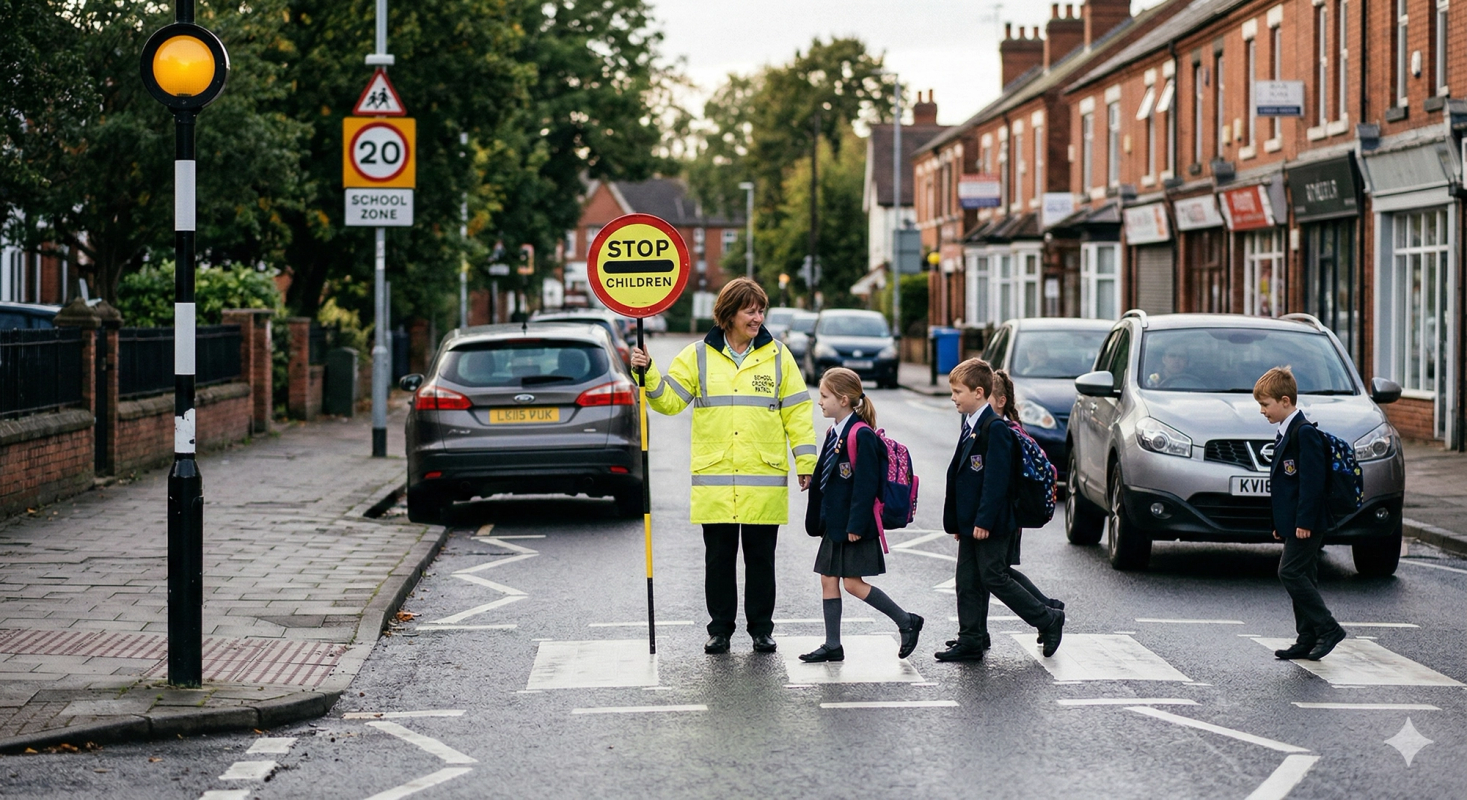
The Government's New Road Safety Masterplan
Bold targets, big money, and some changes that'll affect every driver in Britain

For the first time in over a decade, the Government has laid out an actual plan for making Britain's roads safer. And whether you're a new learner, a seasoned commuter, or a grandparent who's been driving since before seatbelts were mandatory, this one's going to affect you.
The Road Safety Strategy, published in January 2026, sets out some seriously ambitious numbers. The headline target? A 65% reduction in people killed or seriously injured on our roads by 2035. For children under 16, it's even steeper — a 70% cut. Measured against 2022-2024 data, that means thousands fewer families getting the worst phone call of their lives.
So How Are They Planning to Get There?
Let's start with the bit that'll get the most debate down the pub: eyesight tests for older drivers. The Government is consulting on mandatory eyesight testing for drivers over 70, along with potential cognitive assessments. Currently, the over-70 renewal process is essentially an honour system — you self-declare that you're fit to drive. That's set to change, and frankly, it's overdue. We all know someone who probably shouldn't be behind the wheel any more but won't admit it.
Then there's the learner driver shake-up. The Government wants to introduce a minimum learning period of either three or six months before you can sit your practical test. The thinking is simple: more time behind the wheel in varied conditions — night driving, rain, heavy traffic — means better-prepared drivers. It's hard to argue with that logic.
The Drink-Drive Limit Is Finally Dropping
Here's one that's been a long time coming. Plans are in motion to lower England and Wales' drink-drive limit from 35 to 22 microgrammes of alcohol per 100ml of breath, bringing us in line with Scotland and most of Europe. The current limit has been unchanged since 1967, and study after study shows that impairment begins well before you hit it. For most people, this effectively means: if you're driving, don't drink at all. Which, let's be honest, should've been the message all along.
Ghost Plates and Tech Cheats
The strategy also takes aim at a growing scourge: illegal number plates. So-called 'ghost plates' — often using 3D or 4D characters — are deliberately designed to bamboozle speed cameras and ANPR systems. New enforcement measures will crack down hard on these, alongside uninsured drivers and vehicles without a valid MOT. If you've been getting away with dodgy plates, your luck's about to run out.
£24 Billion for Our Crumbling Roads
Perhaps the most tangible promise is the £24 billion earmarked for road maintenance and improvement between 2026 and 2030. That's money going to both National Highways and local authorities to fix the pothole-riddled state of our road network. If you've recently had your tracking knocked out by a crater on a B-road, you'll understand why this can't come soon enough.
On top of all this, 18 new vehicle safety technologies are being mandated for new cars — think autonomous emergency braking, lane-keeping assistance, and intelligent speed limiters. And a brand-new Road Safety Investigation Branch will analyse crash data to spot patterns and prevent future collisions, much like the way air accident investigators work.
What This Means for You
In practical terms, expect consultations on the eyesight tests and learner periods to roll out through 2026, with legislation following. The drink-drive limit change will need parliamentary approval, so don't expect it overnight — but the direction of travel is clear. The ghost plate crackdown and tech mandates are already in motion.
Is it ambitious? Absolutely. Will they hit those 65% targets? That depends entirely on follow-through and funding actually reaching the front line. But after years of road safety being treated as an afterthought, it's encouraging to see a Government strategy with real teeth. Safer roads benefit every single one of us — whether we're behind the wheel, on two wheels, or crossing the street.
We'll be watching closely to see if the promises match the delivery. In the meantime, keep your eyes on the road — and maybe get them tested while you're at it.
Updated:
« Back to News